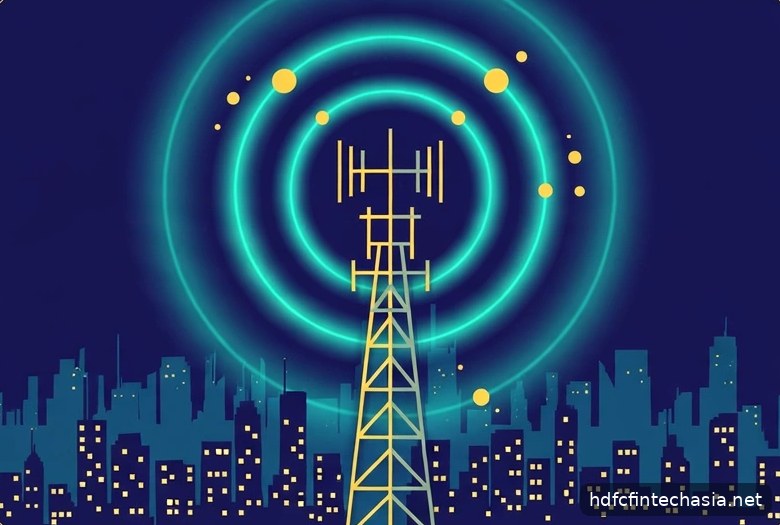
Every phone call, text message and mobile payment you make travels on invisible signals, and understanding telekom fintechasia helps you see why those signals matter to your money. When a network is fast and reliable, payments go through in seconds, apps load without delay, and small businesses can sell to customers far away. When a network is weak, the same payment can fail, a video call can freeze, and a simple transfer can feel stressful. This guide explains, in plain language, how telecom networks work, what affects their quality, and how to use that knowledge to make smarter everyday money choices.
Think of a mobile network as a road system for data. Towers are the junctions, fibre cables are the highways, and your phone is the vehicle carrying your information. The more roads and the better they are maintained, the smoother the journey. That is why news about 5G, fibre broadband and new towers is not just technology news. It is money news, because it decides how quickly you can bank, shop, work and learn online.
What Is Telekom FintechAsia?
In simple terms, telekom fintechasia is our way of looking at telecom through a money lens. Instead of stopping at speeds and gadgets, we ask a practical question: what does this network change mean for your wallet? A cheaper data plan can free up money every month. A faster connection can help a freelancer take on more clients. A wider rural network can bring banking to a village that never had a bank branch. Each of these stories starts with a signal and ends with a household budget.
For a fuller picture of telecom news, you can also read our original guide, FintechAsia Net Telekom: Telecom News, 5G and Digital Services, which covers 5G rollouts and digital services in more detail. Together, the two guides give you both the big picture and the practical detail.
How Mobile Signals Actually Reach Your Phone
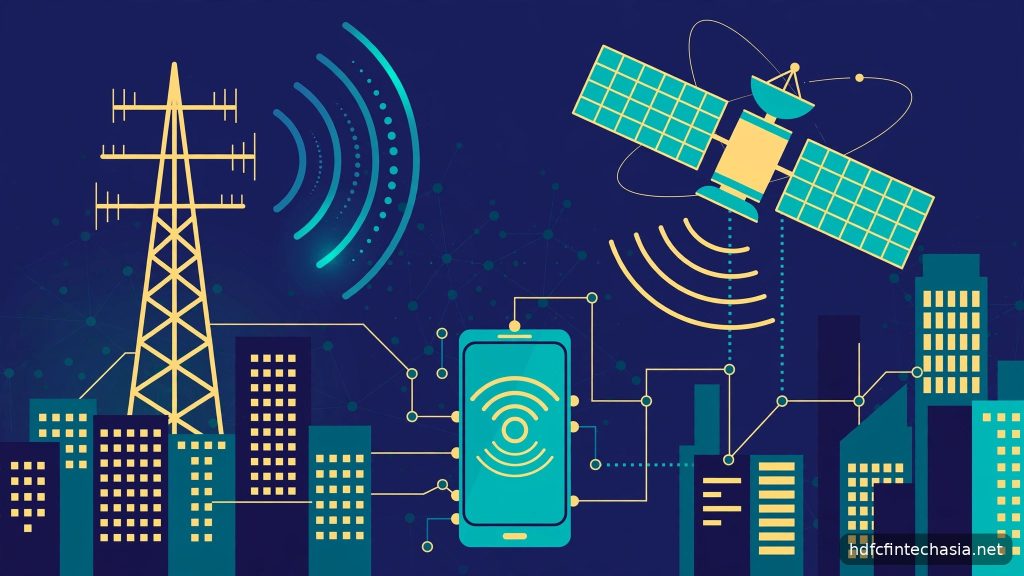
Your phone constantly talks to the nearest tower. When you open an app, the phone sends a request to the tower, the tower passes it along fibre or microwave links to the wider internet, and the answer travels back the same way. Distance matters: the farther you are from a tower, or the more walls and hills in between, the weaker the signal. Weather, building materials and the number of people sharing the same tower can also slow things down.
That is why two people on the same network can have very different experiences. One person standing near a tower in a city may stream video easily, while another in a crowded stadium or a remote valley may struggle. Network operators solve this by adding small cells, which are mini towers for busy areas, by upgrading towers to newer technology, and by laying more fibre so each tower can carry more data at once.
Signals, Spectrum and Speed in Plain English
Spectrum is the radio airspace that networks use, and it comes in different bands. Low bands travel far and pass through walls well, but carry less data. High bands carry a lot of data very fast, but only over short distances. Good networks mix the bands, like a transport system that uses both long-distance trains and fast local trams. When you hear that an operator bought new spectrum, it usually means better coverage, faster speeds, or both in the months that follow.
What Network Quality Means for Your Money
A strong signal saves money in ways you may not notice. Mobile banking uses very little data, but it needs a stable connection at the exact moment you confirm a payment. If the connection drops, you may pay twice, miss a bill deadline, or lose a discount that was only available for a few minutes. Traders face the same risk at a larger scale: a delayed price update can turn a good decision into a loss. This is why serious users check coverage maps before choosing a provider, not just headline speeds.
For households, the money question is simpler. Start by listing what you actually use: calls, video, schoolwork, work calls, streaming and banking. A family that mostly messages and banks needs reliability more than the fastest plan. A household with two people working from home and children learning online needs more speed and a higher data allowance. Paying for the fastest plan when a mid-range plan covers your real use is money wasted every month, while paying for too little data can lead to expensive top-ups.
A Quick Checklist Before You Switch Plans
- Check coverage at home, at work and on your usual commute, not just in the city centre.
- Compare the total monthly cost, including taxes, device payments and any Fair Use limits.
- Ask what happens when your data runs out: slower speed, a block, or a costly top-up?
- Test the network with a short plan or trial before signing a long contract.
- Keep a note of your bill for three months and check whether you use what you pay for.
Networks, Payments and Small Businesses
For a small shop, a reliable network is now as important as a good location. Card readers, QR payments and online orders all depend on it. A shop that can accept digital payments during a busy market day will serve more customers and lose fewer sales to cash-only limits. Delivery riders, taxi drivers and freelancers also depend on live maps and instant payment alerts, so a dead zone can mean a lost job, not just an inconvenience.
Telecom growth also opens new kinds of work. When fast internet reaches a town, residents can sell crafts online, teach classes by video, or offer customer support from home. That is why crypto and digital money guides often sit beside telecom news: both depend on the same rails. A payment cannot be instant if the network carrying it is slow, and a new financial app cannot help people it cannot reach.
Frequently Asked Questions
What does telekom fintechasia mean?
Telekom fintechasia means looking at telecom news through a money lens: how signals, networks, prices and coverage affect payments, work, shopping and household budgets.
Does a faster network always save money?
Not always. Speed helps when you work, learn or trade online, but the cheapest plan that reliably covers your real use is usually the best value. Compare coverage and total cost, not speed alone.
Why do payments fail on a weak signal?
Payments need a stable connection at the moment of confirmation. A drop in signal can interrupt that step, so the app may time out even though your balance is fine. A stronger signal or a retry on a better connection usually fixes it.
How can I check coverage before switching?
Use the operator coverage map, ask neighbours about their experience, and test with a short-term plan at the places you use your phone most, including home and work.
One Comment