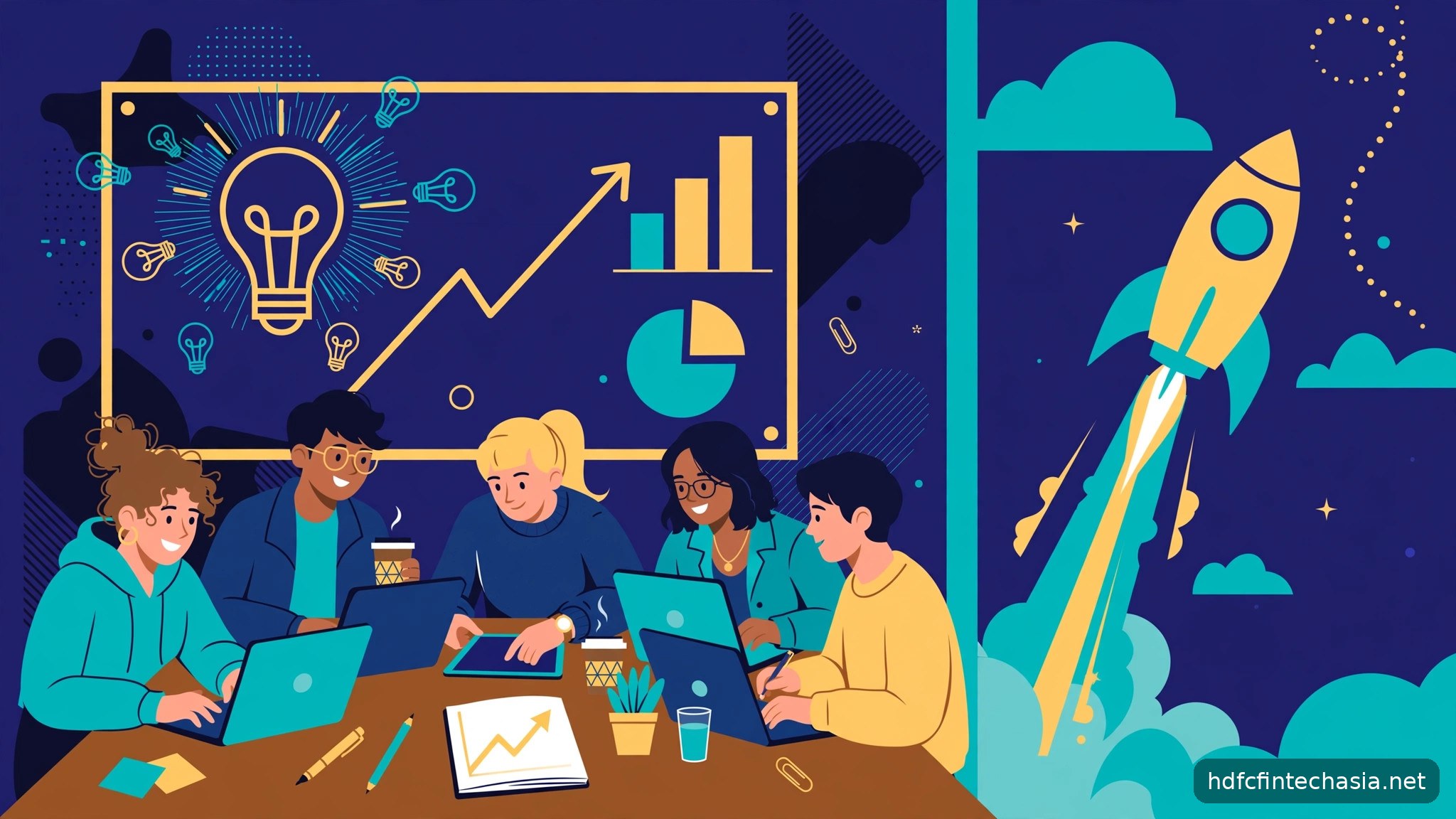
Welcome to fintechasia net start me up, our guide to startup stories, funding and fresh ideas. A startup is a young company trying to solve a problem in a new way, usually under conditions of uncertainty. Some grow into household names, many stay small, and plenty fail quietly. What makes them worth following is not only success, but the ideas, people and choices behind the attempt.
Startups matter because they test what is possible. Large companies improve what already exists; startups often ask whether a completely different approach could work. That is why their stories travel well beyond business pages. A new payment app, a health tool, or a logistics platform can change daily life for ordinary people long before it becomes a headline investment.
Our Hdfc FintechAsia Net home page brings all eight coverage areas together. For more articles like this one, visit the Startups category. If you have a founder story or a question, please use the Contact Us page.
What makes a startup different?
The usual definition is growth ambition. A small business may aim to serve a local market steadily, while a startup is built to scale quickly if its idea works. That ambition affects everything: how it hires, how it spends, how it raises money, and how much risk it accepts. It also explains why startup culture celebrates speed, experimentation and learning from failure.
Not every new company is a startup, and not every startup uses venture capital. Many founders bootstrap, meaning they fund growth from revenue or personal savings. Others take outside investment in exchange for a share of the company. Neither path is automatically better. Bootstrapping preserves control but can limit speed; outside funding can accelerate growth but adds pressure to deliver rapid returns.
How startup funding works
Funding usually arrives in stages. A pre-seed round may come from founders, friends or early believers. A seed round helps a team build a product and find its first customers. Later rounds, often called Series A, B and beyond, support expansion into new markets or product lines. Each round typically values the company higher if progress is strong, but also dilutes the founders’ ownership, because new shares are issued to investors.
Investors look for more than a good idea. They ask about the size of the market, the strength of the team, early evidence that customers want the product, and a realistic path to revenue. A polished pitch can open a door, but due diligence follows: investors check numbers, talk to customers, and test assumptions. Founders who understand their unit economics, meaning what it costs to win a customer and what that customer is worth, tend to have more useful conversations.
Ideas that keep appearing
Across Asia and beyond, several startup themes repeat. Fintech startups try to make payments, lending and saving easier for people underserved by traditional banks. Health startups use apps and data to improve access to care. Education startups offer flexible learning, and logistics startups use software to move goods more efficiently. Artificial intelligence now appears in many of these stories, not as a standalone industry, but as a tool that changes how existing services are built.
What founders get wrong, and right
One common mistake is building a product before talking to customers. A team can spend months perfecting features nobody asked for, then discover the real problem was different. Successful founders usually test early, with a simple version, and listen carefully to feedback, even when it is uncomfortable. Pivoting, changing direction based on evidence, is often presented as failure, but it is frequently how a workable business is found.
Another mistake is hiring too fast or spending as if growth were guaranteed. Cash discipline matters, especially when funding markets cool. The founders who last tend to combine optimism with clear priorities: a small set of goals, a team that can deliver them, and honest measurement of progress. Culture also matters. Early hires shape how a company treats customers, handles disagreement, and responds to setbacks.
Reading startup news wisely
Funding headlines can mislead. A large round does not prove a business is profitable, and a quiet company may be growing steadily without publicity. When you read startup news, look for evidence beyond valuation: revenue growth, customer retention, hiring quality, and whether the company can explain its path to sustainability. Be cautious with claims of disruption that arrive without numbers, and remember that timing, regulation and competition can change a promising story quickly.
For a wider economic view, see FTAsiaEconomy: Economy Updates and Tech News by FintechAsia. Startups do not operate in isolation; interest rates, consumer spending and policy all shape which ideas get funded and which struggle. Reading both lenses together gives a fuller picture of change.
Frequently asked questions
What is fintechasia net start me up?
It is our startup coverage on FintechAsia Net: stories about founders, funding rounds, new ideas and the lessons behind them, written in plain language for general readers.
Do all startups need venture capital?
No. Many grow through revenue, grants or personal investment. Venture capital suits companies that need large amounts of money to scale quickly, but it also brings expectations and dilution.
How can I tell if a startup idea is promising?
Look for a real problem, customers who care enough to pay, a team that can build and sell, and a market large enough to support growth. A novel idea without demand is a hobby, not a business.
Why do so many startups fail?
Common reasons include weak demand, running out of cash, team problems, strong competition and poor timing. Failure is normal in this world, which is why investors spread bets across many companies.
Where can I suggest a startup to cover?
Please use the Contact Us page. Tell us what the company does and why its story matters to readers.
Keep exploring: start from our home page, then read FintechAsia Net Crypto Facto: crypto facts, market basics and trends and FTAsiaEconomy: economy updates and tech news.
One Comment