Welcome to fintechasia net crypto facto, a plain-language guide to crypto facts, market basics and trends. When readers search for crypto facto fintechasia net, they usually want the same thing: a clear answer without hype, without fear, and without a sales pitch. This article gives you that foundation, so you can follow crypto news with confidence and make calmer decisions.
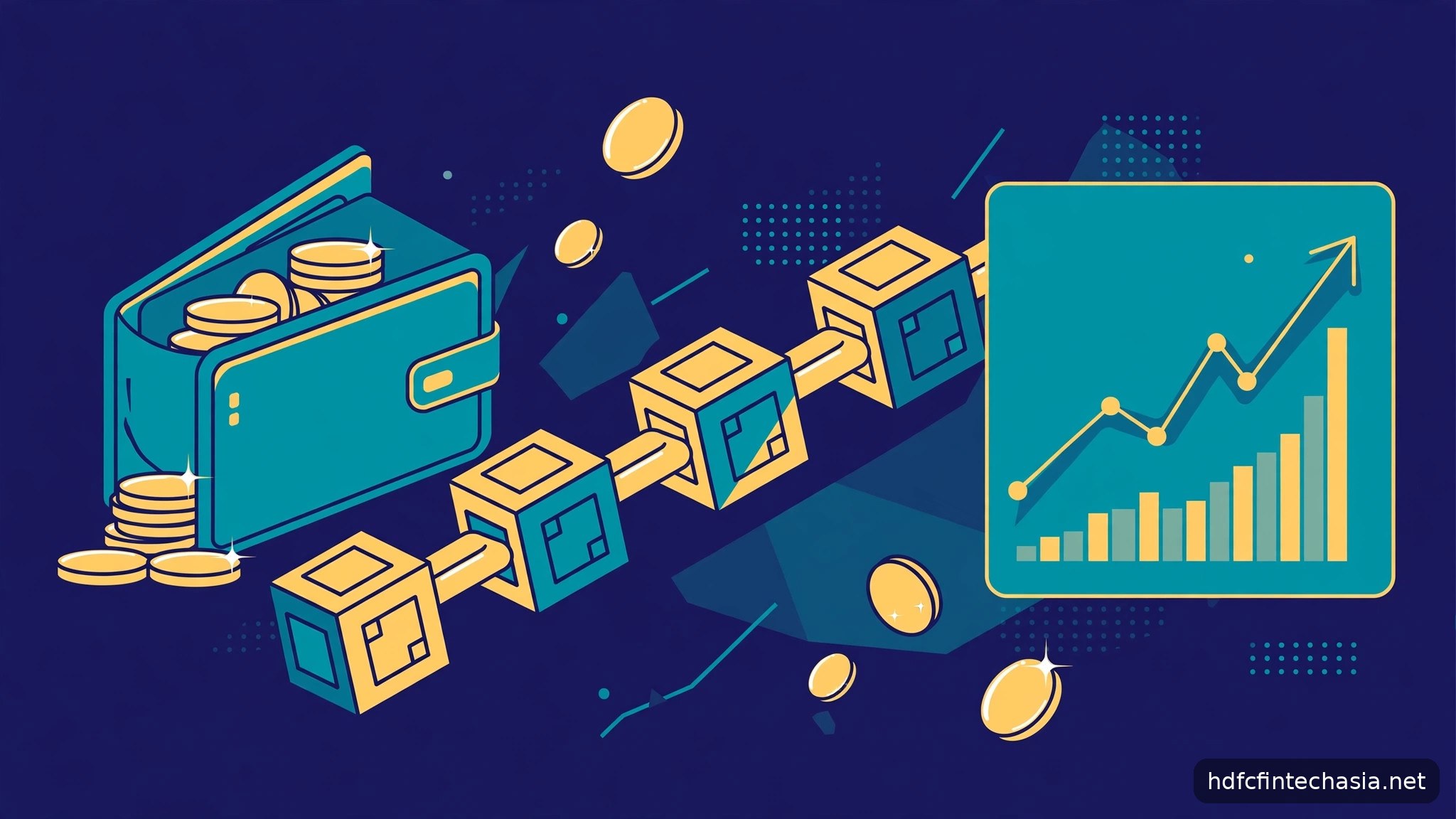
Cryptocurrency is digital money that runs on a shared record called a blockchain. Instead of a single bank holding the only copy of the ledger, many computers hold copies and agree on new entries. That design is what makes crypto different from a normal bank balance, and it is also why the topic attracts both excitement and scepticism. Understanding the mechanism matters more than following any single coin.
Our Hdfc FintechAsia Net home page gathers all eight coverage areas in one place. For more articles like this one, visit the Crypto category. If you have a question or a correction, please use the Contact Us page.
What is cryptocurrency, in simple terms?
Think of a cryptocurrency as a digital asset with a limited set of rules. Bitcoin, the first major example, was designed as a peer-to-peer electronic cash system with a fixed maximum supply. Later projects added other ideas, such as programmable contracts, faster payments, or tokens that represent a real-world asset. The shared idea is that value can be transferred online without relying on one central intermediary for every step.
A blockchain records transactions in blocks, linked together in order. Once a block is confirmed by the network, changing it would require changing every later block as well, which is deliberately difficult. That does not make crypto risk-free or scam-proof, but it does explain why supporters talk about transparency: anyone can inspect the public ledger, even if the identities behind addresses are not always obvious.
How crypto markets actually move
Crypto prices move for many reasons, and news is only one of them. Supply and demand, interest rates, regulation, technology upgrades, exchange activity and simple market sentiment all play a part. Because crypto trades around the clock, prices can move sharply overnight, and a quiet weekend can still produce a large swing. That volatility is a fact of the market, not a flaw in any one report about it.
New readers often make two mistakes. The first is treating a price chart as a prediction. A chart shows what happened, not what will happen next. The second is following social media excitement as if it were research. Influencers may hold the asset they promote, and short-term price moves are often driven by trading rather than by real changes in a project. A calmer approach is to ask what a project does, who uses it, how it is governed, and what risks remain.
Key terms worth knowing
Market capitalisation is the total value of all coins in circulation, calculated as price multiplied by supply. Liquidity describes how easily you can buy or sell without moving the price. A wallet is software or hardware that stores the keys used to control crypto; losing those keys usually means losing access. A stablecoin is designed to track another asset, often a currency, but its stability depends on how it is backed and managed. None of these terms guarantees safety, but knowing them helps you read news more critically.
Trends to watch, without the hype
Several trends are shaping crypto beyond daily prices. Traditional financial firms are offering crypto products, payment companies are experimenting with digital settlement, and regulators in many countries are setting clearer rules. At the same time, developers are working on scaling networks, reducing energy use, and improving user experience so that ordinary people do not need technical expertise to use a wallet safely.
Another trend is the growth of tokenisation, where assets such as bonds or property are represented as digital tokens. Supporters argue this could make markets more efficient and accessible. Critics warn that tokenising an asset does not remove its underlying risks. Both points can be true, which is why careful reporting focuses on evidence, such as real usage and audited reserves, rather than promises alone.
Staying safe in crypto
Safety starts with basics. Use reputable platforms, enable two-factor authentication, and never share private keys or recovery phrases with anyone, including people who claim to be support staff. Be sceptical of guaranteed returns, urgent pressure to invest, and projects that cannot explain their product in simple terms. If an opportunity sounds too good to be true, it usually is, and a short pause can save a great deal of money.
It is also wise to separate learning from investing. Read, watch and compare for a while before committing funds, and only use money you can afford to lose. Diversification does not remove risk, but putting everything into one asset, or borrowing to buy a volatile asset, increases the chance of a painful outcome. Keep records of transactions for tax and personal review, and check local rules, because crypto regulation varies widely by country.
For a different kind of new-economy story, see FintechAsia Net Start Me Up: Startup Stories, Funding and Fresh Ideas, where founders and funding take centre stage. Crypto and startups often overlap, but they reward different kinds of research, and comparing them can sharpen your judgement in both.
Frequently asked questions
What is fintechasia net crypto facto?
It is our crypto facts coverage on FintechAsia Net: clear explanations of coins, blockchains, markets and trends, written for readers who want facts first and hype last.
Is cryptocurrency money?
It can be used as a medium of exchange in some places, but it is also treated as an investment asset and, in many countries, it is not legal tender. Its role depends on local law and on how widely it is accepted.
Why do crypto prices move so much?
Crypto markets trade continuously, are relatively small compared with traditional markets, and are sensitive to news, regulation and sentiment. That combination produces larger swings than many investors expect.
How much should a beginner learn before investing?
Learn the basics of blockchains, wallets, exchanges and risks first, then start small if you choose to invest at all. Education is not a guarantee, but it reduces the most common beginner mistakes.
Where can I ask a crypto question?
Please use the Contact Us page. Reader questions help us choose the next topics to explain in plain language.
Keep exploring: start from our home page, then read Crypto Facto FintechAsia Net: myths, facts and safety checks and FintechAsia Net Start Me Up: startup stories, funding and fresh ideas.
3 Comments